

India's AVGC-XR push in 2026: IICT, school creator labs and what it means for brands
10 November 2026
Current India industry news (sources dated 5 Aug and 26 Oct 2026)
The short version
India's government groups animation, visual effects, gaming, comics and extended reality under one label: AVGC-XR. In 2026, several developments moved this sector forward. Below is a summary of what official and reported sources say, and what it may mean for businesses that commission animation.
IICT: a national centre for creative skills
According to a 26 October 2026 release from the Press Information Bureau (PIB), the government set up the Indian Institute of Creative Technologies (IICT) in Mumbai as a National Centre of Excellence for AVGC-XR, established in 2025 on the recommendation of the AVGC Promotion Task Force. PIB states that, as of March 2026, IICT had introduced 18 courses with over 135 students enrolled, and that it collaborates with companies including Google, Meta, Adobe and Netflix.
On 5 August 2026, The Economic Times reported that Netflix launched an "India Storytelling Initiative". Its first phase includes a partnership with IICT to co-develop curricula in visual effects and media technology workflows, and 100 scholarships for in-person programmes.
₹250 crore for AVGC Content Creator Labs
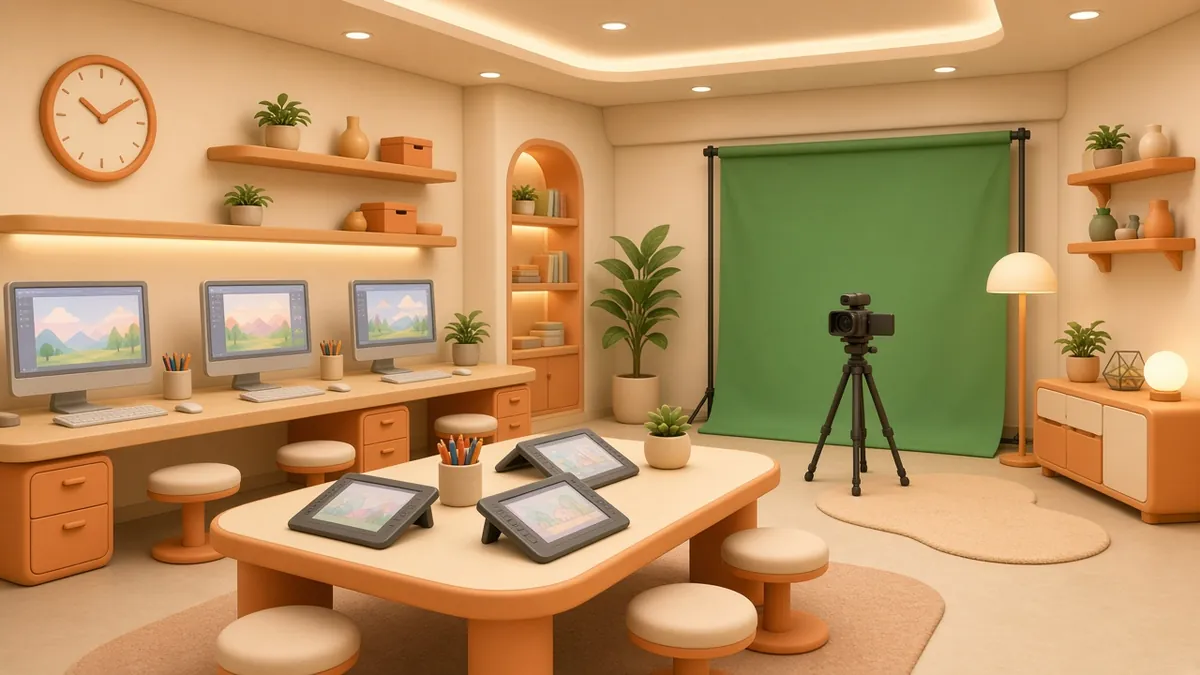
The same PIB release says the Union Budget 2026–27 allocated ₹250 crore to set up AVGC Content Creator Labs in 15,000 secondary schools and 500 colleges, with IICT as the nodal agency. The stated aim is to give students hands-on experience with animation, VFX, gaming and digital content tools.
If this rolls out as planned, many more young people will learn basic animation and content skills during school and college.
States are writing their own policies
PIB also summarises state-level AVGC-XR policies, including Maharashtra's AVGC-XR Policy 2025, Karnataka's AVGC-XR Policy 3.0, Tamil Nadu's AVGC-XR Policy 2026, Kerala's 2024 policy, Madhya Pradesh's 2025 policy and Rajasthan's 2024 policy, plus an AVGC-XR park being developed in Jewar, Uttar Pradesh. Incentives and eligibility differ by state, so any studio or brand considering them should read the specific state policy document.
What this means for brands
These are early-stage, education-led measures. They will not change production costs overnight, but they point in a few clear directions:
- A bigger talent pool over time. More trained artists, especially in VFX, real-time 3D and XR, should help Indian studios handle larger and more technical projects.
- More animation in education. School and college labs create demand for learning content, and give ed-tech brands and institutions more reasons to use animation.
- Immersive formats are on the agenda. Government communication is now placing AR, VR and 3D experiences alongside traditional animation. Brands in retail, real estate and tourism may see more interest in 3D product views and virtual walkthroughs.
What it means for creators and students
If you are learning animation, it is worth following IICT's course announcements and your state's AVGC-XR policy for scholarships, labs and incubation programmes. A portfolio of finished shots, not only tutorial exercises, is generally a stronger way to show your skills.
A note on numbers
Market forecasts in press releases often come from third-party reports with their own methods. This article repeats only the official figures for budgets, courses and enrolment. Treat projections as estimates.
Exploring animation or 3D visuals for an education, retail or real-estate brand? Contact Supreme Animation to discuss your project.