

Artist-led AI moves into animation pipelines: what this week's studio news means for brands
12 November 2026
Current news (as of 12 November 2026)
What happened this week
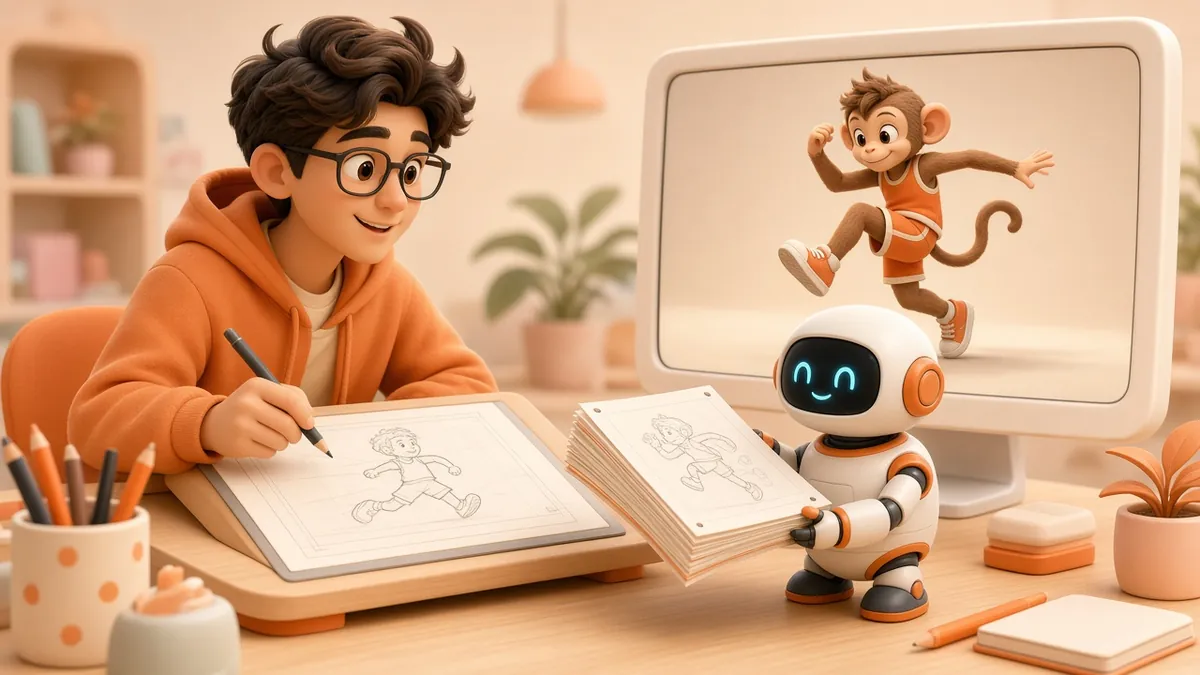
Several animation companies talked publicly about AI in early November 2026. They did not pitch "type a prompt, get a film". They described tools that take over the slow, mechanical steps between creative decisions, while artists still direct and approve the work.
- Animaj (the company behind Pocoyo, Maya the Bee and Ozzy Fox) introduced FlipMove, a workflow that carries a scene from an approved animatic to finished animation inside an editable 3D pipeline. Animation Journal reported it on 11 November 2026.
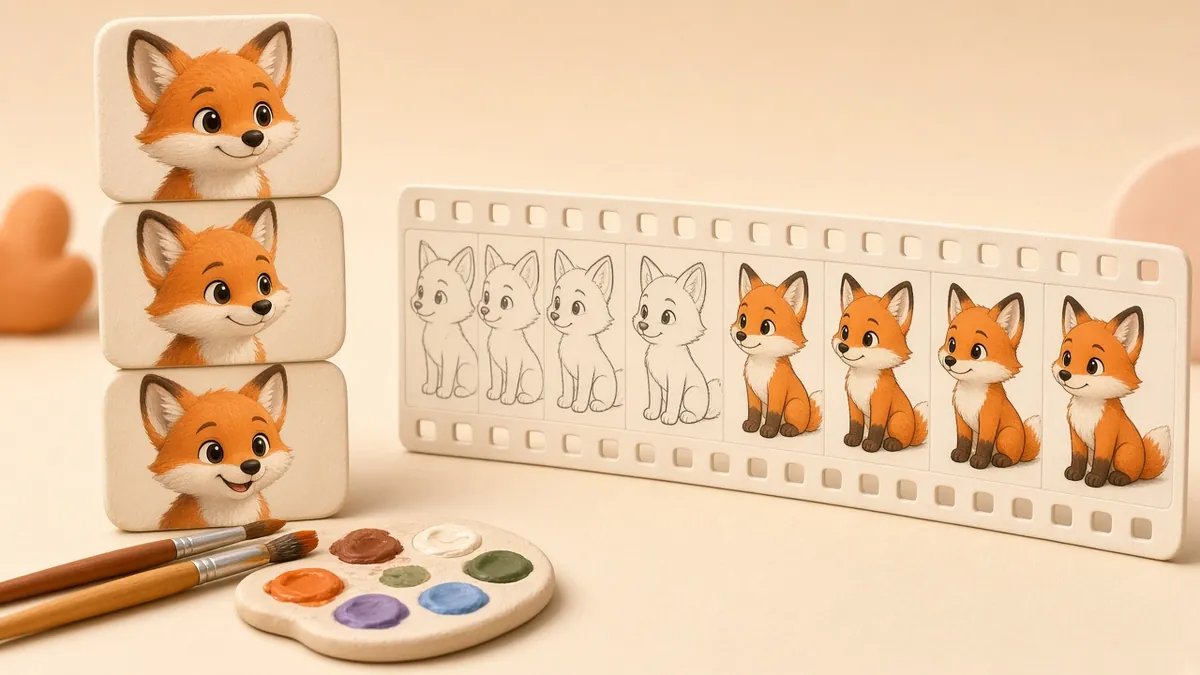
- OLM, the Japanese studio behind the Pokémon anime, described an AI colouring tool that learns a show's look from three hand-painted frames. Variety reported this from the Taiwan Creative Content Fest on 7 November 2026.
- Toon Boom, maker of Harmony and Storyboard Pro, said the beta of the colouring tool in its Ember AI suite is wrapping up, with in-betweening expected to enter beta within a couple of weeks (also reported by Variety).
- Adobe and Disney announced a multi-year alliance. It includes custom Adobe Firefly Foundry models trained on Disney-specific material, such as character attributes, environments and visual styles. AWN reported it on 11 November 2026.
Animaj FlipMove: from animatic to editable 3D
According to Animation Journal, FlipMove joins several Animaj tools into one workflow:
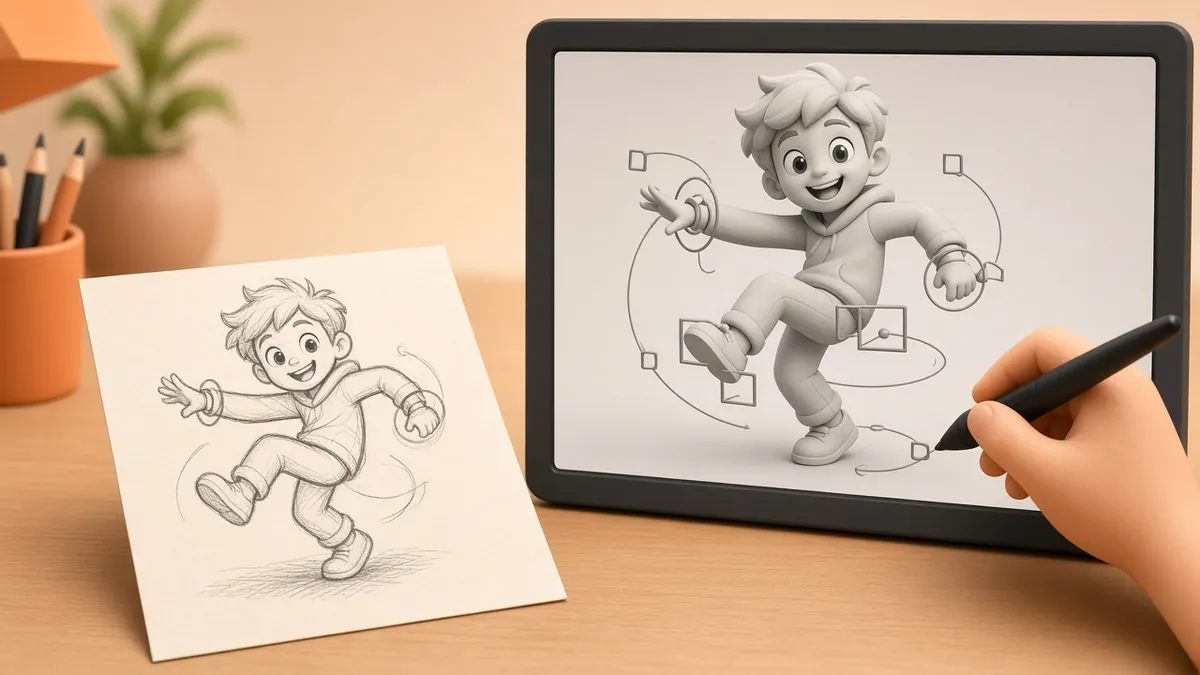
- Sketch-to-Pose turns drawings into editable 3D poses.
- Motion-In-Betweening generates the poses between key poses set by animators.
- Animatic-to-Layout uses an approved 2D animatic to set up cameras, props, staging and poses in a 3D scene.
- Layout Retakes and Pose Retakes turn director feedback into revised layouts and shots for artists to review.
Animaj says a director's note can become an editable layout or pose revision in two minutes instead of twenty. Its CTO, Antoine Lhermitte, said the revision "lives in the Blender scene", where artists can inspect it and keep animating. The company says every 3D output stays editable until final animation approval, and that FlipMove is already used on Ozzy Fox.
OLM and Toon Boom: AI for colouring and in-betweening
Variety reports that OLM's tool came out of ANIMINS, a 15-month research project under GENIAC, a generative AI programme overseen by Japan's Ministry of Economy, Trade and Industry. An artist colours three frames by hand. The system learns that show's line shapes and palette in about 90 seconds, then colours each remaining frame in around 15 seconds.
OLM's Yotsukura Tatsuo said that, at proof-of-concept stage, it has cut painting workload by around 30%. The checkers who review every coloured frame have somewhat more to do, he added. He also said, "Strictly speaking, it isn't generative AI," because it trains only on the production's own frames.
For Toon Boom's Ember, Variety reports that one Manila studio testing the colouring tool cut painting time on a 90-second-to-two-minute scene from 15 hours to two or three.
The same panel showed the limits. Yotsukura said AI often gets close to 80% of the way, but professionals need tools that follow direction every time and allow corrections. He noted that AI image edits can shift colour values even when the result looks fine. Blue Spirit's Charles Beirnaert said his studio uses no AI at all on its Netflix series. Variety notes that Netflix's partner guidelines, issued in August 2025, require partners to disclose intended generative AI use, with written approval needed for some uses, including generative AI material in the final product.
Adobe and Disney: custom models trained on owned material
AWN reports that Adobe becomes Disney's Official AI Innovation Partner. Disney's creative teams get early access to Adobe's AI and creative tools, and the two companies will build models with Firefly Foundry. Walt Disney Imagineering already uses a sketch-to-image model that turns artists' hand drawings into finished 2D concept art.
What this means if you commission animation
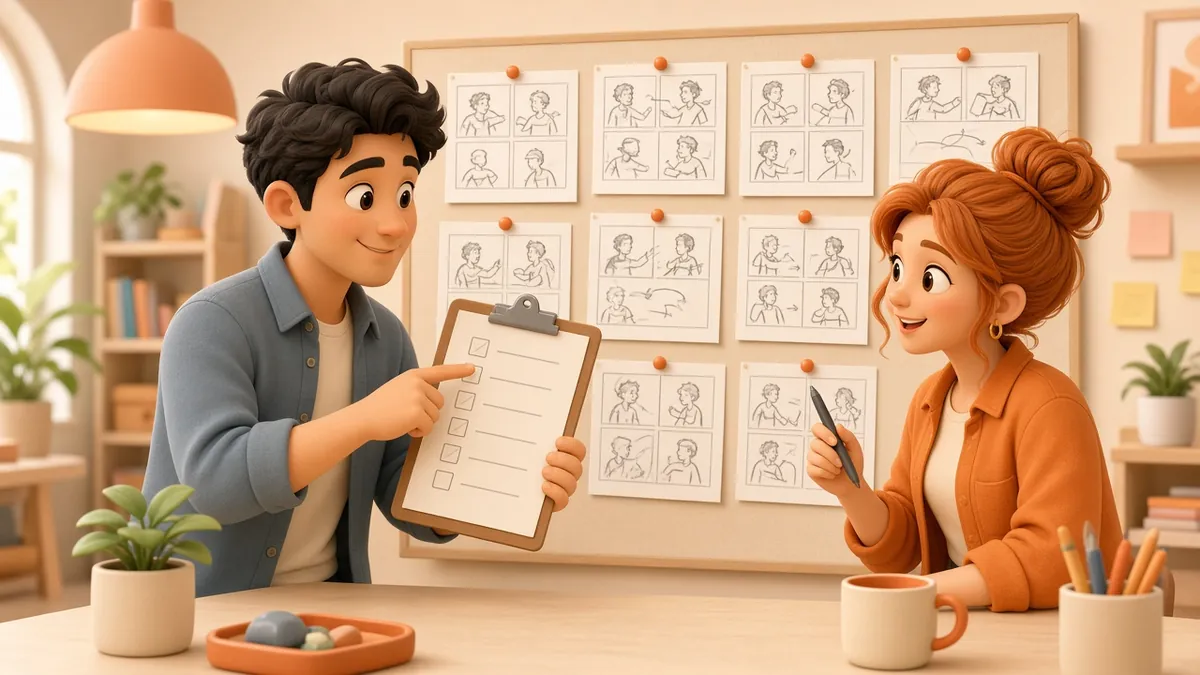
The common thread is AI on the repetitive steps, people on the creative decisions, often trained on the production's own material. For brands, that suggests some practical questions to ask a studio:
- Where in the pipeline is AI used? Colouring, in-betweening or layout help is very different from generating final characters.
- What is it trained on? Tools trained on your own approved frames or brand assets carry different rights questions than general models.
- Does the output stay editable? You want revisions in real project files (for example a Blender or Harmony scene), not a flat video you cannot adjust.
- Who checks quality? OLM's experience suggests review time can go up even when production time goes down. Budget for it.
- What do your platforms require? Streamers and channels may have their own disclosure or approval rules. Check them before production starts.
- Will savings change the scope or the price? Faster steps can mean more revision rounds or more versions within the same budget. Agree which one you are getting.
The short version
This week's announcements point to AI becoming a normal part of professional animation pipelines, mostly as an assistant that removes repetitive work. Artists still direct and approve the work. Most of these tools are new, in beta, or used in-house, so expect them to keep changing. Ask your studio how it uses AI, what it is trained on, and how you keep control of revisions.
Planning an animated video and want to talk about workflow? Get in touch.
Sources
- Animation Journal, "Animaj unveiled FlipMove, an Artist-led AI Animation Workflow" (11 November 2026)
- Variety, "'Pokemon' Anime Studio OLM Trains AI Coloring Tool on Just Three Frames in Japan Government-Backed Project" (7 November 2026)
- Animation World Network, "Adobe and Disney Announce Multi-Year AI Alliance" (11 November 2026)