

Google Flow, Beeble SwitchX 3.0 and Seedance 2.5 Flash: what this week's AI video tools mean for brand videos
13 November 2026
Current news (as of 13 November 2026)
What launched on 12 November
Three AI video updates arrived on the same day this week. Each one targets a different part of making a video:
- Google added five new tools to Flow, its AI creative studio. Two of them focus on keeping characters consistent, and one turns phone footage into multi-angle shots.
- Beeble launched SwitchX 3.0, a video-to-video model that changes the environment around a filmed performance while keeping the performance itself.
- Volcano Engine released Seedance 2.5 Flash, a faster and cheaper version of its Seedance 2.5 video model, aimed at producing many clips in batches.
None of these tools replaces a script, a storyboard or a creative team. But they do change what is quick and cheap to try, and that affects how brands plan and brief video work.
Google Flow: five tools built by artists
Google says each of the five new Flow tools was built by a working artist or filmmaker:
- Character Poster turns simple story concepts into polished visuals and helps creators keep a signature style across their social stories.
- Character Arc shows the same character at different ages and life stages without losing their core look. Google says it speeds up character development before full production begins.
- Pixel Machine converts images into bitmap, ASCII, CRT, pixel art and glitch styles, for title treatments, transitions and music video visuals.
- Lucid Glass recreates the way light passes through glass, generating prisms, halos, refractions and optical blooms.
- Pocket Studio takes a single phone take, generates multiple camera angles and upgrades the visual quality, while keeping the actor's original performance.

Why it matters for brands: character consistency has been one of the weak points of AI video. If you have a mascot or a recurring brand character, tools like Character Poster and Character Arc are aimed squarely at that problem. They are most useful early on, for exploring looks and pitching ideas, before a character is locked and built properly for animation.
Beeble SwitchX 3.0: change the world around a performance
According to Content+Technology, SwitchX 3.0 lets filmmakers and VFX artists transform a filmed environment, add moving elements and direct events in a scene, while the original live-action performance stays intact. The update adds:
- support for up to four visual references (images, floor plans or storyboards can be combined to guide the environment)
- dynamic backgrounds, such as filling an empty street with moving crowds
- improved camera tracking that keeps generated environments aligned with handheld, orbiting and running shots, without tracking markers or a separate matchmove pass
- more precise prompt control
Beeble says its Source-Locked Rendering keeps the actor's performance inside their alpha matte, frame by frame, while the surroundings and lighting change. SwitchX 3.0 supports up to 4K output with 10-bit colour, and is included in Beeble's paid plans with no change to credit pricing. 4K and 10-bit MOV downloads are limited to Professional and Team subscribers.
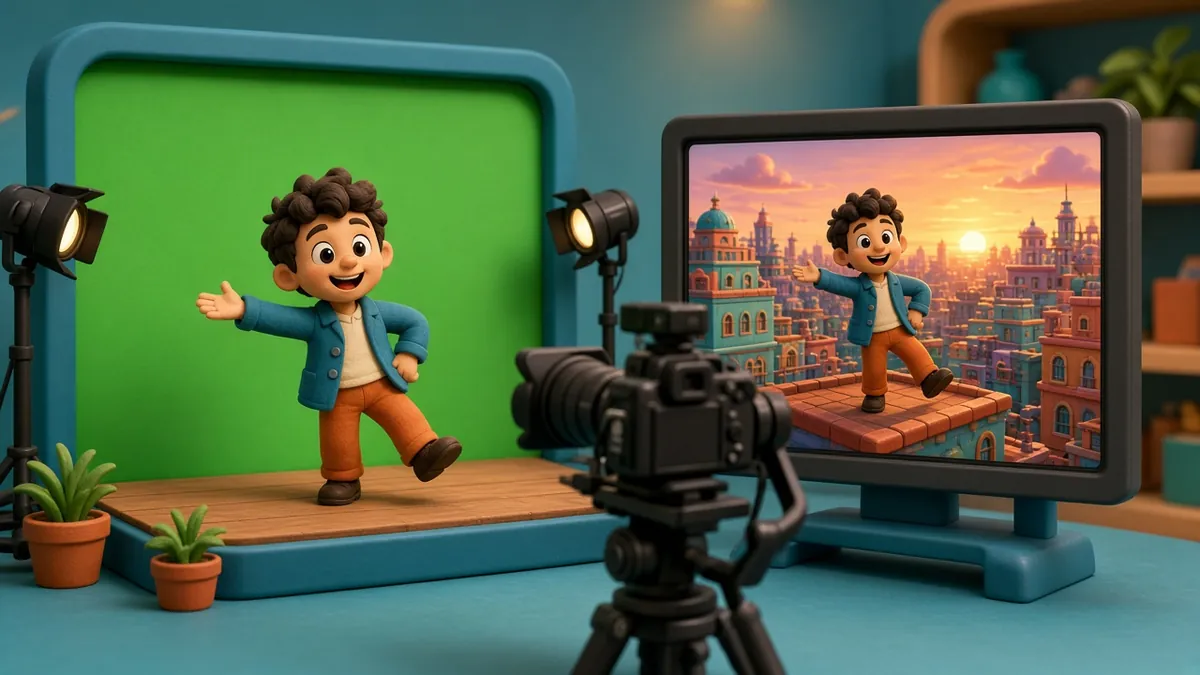
Why it matters for brands: a simple green-screen or location shoot could be placed into several different settings without reshooting. That can help with regional versions of an ad or with testing backgrounds. You still need a well-lit, well-performed original take, because the tool keeps that performance as it is.
Seedance 2.5 Flash: cheaper clips in volume
AIbase reports that Volcano Engine's Seedance 2.5 Flash doubles generation speed and is positioned as the cost-effective version closest to the flagship Seedance 2.5. Key details from the announcement:
- clips of up to 30 seconds, at 480P or 720P
- up to 10 images, 5 videos and 5 audio clips as input in a single request
- 720P text-to-video and image-to-video at about RMB 0.99 per second, roughly 34% lower than Seedance 2.5
- a gradual rollout on platforms including Dreamina, with API access on Volcano Ark from 15 November
The flagship Seedance 2.5 remains the option for 1080P, with 4K described as upcoming.
Why it matters for brands: low per-second prices make it practical to generate many rough versions of an idea. Treat that as a drafting step. A generation price is not the cost of a finished, approved video, which still needs scripting, review, edits, sound and brand checks.
How to use this week's tools sensibly
If your team is planning an animated or AI-assisted video, a few practical points apply to all three launches:
- Use AI output for exploration first. Character looks, background options and rough animatics are where these tools save the most time.
- Lock your character before production. Consistency tools help, but a properly designed and approved character sheet is still the reference everything else should follow.
- Check resolution and licensing early. Several features above are tied to specific plans, resolutions or regions. Confirm what your final delivery needs before you rely on a tool.
- Keep a human review step. Check every AI-generated shot for brand accuracy, on-screen text and anything that could mislead viewers, and follow platform rules on disclosing AI content.
- Ask your studio how it uses these tools. A good partner can tell you which steps use AI, what that saves, and where artists still make the decisions.
The short version
This week's launches push AI video further into consistent characters, environment changes around real footage, and cheap high-volume drafts. They are useful for exploring ideas quickly, but finished brand video still depends on a clear script, a locked design and careful review. Most of these features are brand new, so expect them to change.
Planning a brand video and wondering where AI fits? Get in touch.
Sources
- Google, "5 new Google Flow Tools designed by visual artists" (12 November 2026)
- Content+Technology, "Beeble Launches SwitchX 3.0 with Dynamic Environments" (12 November 2026)
- AIbase, "Volcano Engine launches Seedance2.5flash: generation speed doubled, 720P at about 0.99 yuan/sec, 34% lower than the flagship" (12 November 2026)